The American flag hanging in my apartment is one of the few things that has followed me through every chapter of my life. My father gave it to me when I was fourteen. Since then, it has been folded into boxes, carried across several moves, hung in temporary rooms, and finally placed on the wall of my first home after leaving the Marine Corps. The fabric is sun-bleached and worn around the edges. It looks tired. Yet when I see it, I do not think only about patriotism or the years I spent in uniform. I think about the people and places left behind, the pressure to keep moving, and how difficult it can be to call somewhere home when part of you is still living inside the structure and relationships you lost. That tension sits at the center of Not Meant to Carry It Alone: Veterans, Solitude, and the Journey to Peace - an exhibition proposed for the National Veterans Memorial and Museum in Columbus, Ohio. Through Lee Teter’s painting Reflections, Zach Bryan’s song “Mine Again,” my father’s flag, a recreation of my first apartment, and a lecture from veteran artist Joe Pisano, the exhibition would show that homecoming is not a single event. It is a long and tortuous process of rebuilding identity, connection, and peace. Veterans can be capable and successful, all while carrying experiences that are difficult to explain. The exhibition would not ask visitors to pity them. It would ask them to pay closer attention to what remains after the uniform comes off.
In my first essay, I wrote about love as service: the kind of love that shows up, accepts responsibility, and remains beside someone when life becomes difficult. Military service taught me that lesson through trust, sacrifice, and the people who stood beside me every day. It also taught me what happens when that closeness disappears. A service member can spend years being surrounded by people who share the same schedule, language, purpose, and responsibility, then leave the military and be expected to build a completely different life almost immediately. The transition replaces daily camaraderie with phone calls, scattered friendships, and silence. An exhibition about solitude would therefore also be an exhibition about love. It would ask visitors to consider what communities owe people who were trained never to leave one another behind, and what it means when the institution ends but the need for connection does not.
The National Veterans Memorial and Museum is the right home for this exhibition because it does not treat military history as only a collection of battles, weapons, and famous leaders. Opened in Columbus in 2018 after growing from an idea proposed by Marine veteran and former senator John Glenn, the museum describes itself as neither a war memorial nor a traditional military museum. Its focus is the people who served and the experiences they carried before, during, and after their time in uniform. Visitors move through personal artifacts, letters, photographs, quotations, and recorded stories rather than being asked to understand service only through equipment or timelines (“Museum Experience”). That distinction matters. A uniform can show what someone wore, but it cannot explain what it felt like to remove it for the last time. A unit photograph can preserve the faces of the people who stood beside one another, but it cannot show the silence that emerges once those people are suddenly scattered across the country or the world.
The museum’s mission strengthens the case for the exhibition. It seeks to “honor all veterans, elevate their stories, and amplify the power of service” through the ideas of honor, connection, inspiration, and education (“Our Mission”). Its permanent exhibition, Veterans Among Us, follows veterans through fourteen thematic alcoves and places individual stories beside larger moments in military history. The museum has also displayed exhibitions that address art, identity, post-traumatic stress, and the transition into civilian life. Its wellness initiative, NVMM ECHO, is built around the recognition that the end of service can also mean the end of daily structure, shared purpose, and camaraderie. ECHO attempts to rebuild belonging through community experiences instead of treating veterans as though they live apart from everyone else (“NVMM ECHO”). Not Meant to Carry It Alone would fit naturally into that work. It would make the emotional consequences of transition visible, then direct visitors toward the relationships and community responsibilities that can make the transition less isolating.
Olivia Laing’s The Lonely City provides important context for understanding why this belongs in a museum rather than only in a clinic or private conversation. Laing writes that “loneliness is difficult to confess,” which helps explain why isolation can remain hidden even when someone appears successful (Laing). It can be produced by institutions, major life changes, stigma, and the disappearance of communities that once gave a person a place. Military transition is one of those changes. A veteran may leave with employment plans, educational benefits, supportive relatives, and a strong record of service while still feeling as if the map of daily life has been taken away. The problem is not simply that the veteran needs to become more social. The larger issue is that an entire system of identity and belonging has ended. A museum can make that loss understandable without suggesting that every veteran experiences it in the same way.
Professor Katie Zeigler’s experience with museums reveals the gap this exhibition would address. Although she has visited museums that portray the trauma of war, she said she was “horrified” that none had focused specifically on veterans’ mental health. These museums often show war itself without fully showing “the aftermath for veterans” (Zeigler). Her distinction is important because museums commonly preserve the battle, the medal, and the uniform while leaving the homecoming unfinished. Storytelling would be central to this exhibition because statistics can identify patterns, but stories allow visitors to understand the effects of those patterns. Zeigler describes storytelling as “tantamount to understanding the veteran experience” because every person’s service is complex and unique (Zeigler). Professor John Kropf makes a similar distinction between explanation and connection: theories can describe the systems surrounding war, but “people relate to stories” (Kropf). The exhibition would use those stories to help bridge the gap between military and civilian life without suggesting that one visit can make an outsider fully understand an experience they never lived.
That gap shows up in how the public often imagines veteran mental health. A veteran is frequently treated as either completely fine or completely broken. The reality usually exists between those extremes. In a Department of Veterans Affairs study of nearly 10,000 recently separated veterans, about one-third reported chronic mental-health concerns both three and nine months after leaving service. Sleep problems, anxiety, and depression were among the most common concerns, yet most participants also reported positive work and social relationships (“Health Ranks”). Someone can attend school, work, build relationships, serve the community, and still struggle privately with identity, rest, or belonging. Success does not erase difficulty. Difficulty does not erase capability. A responsible exhibition should hold both truths at once.
The first central object in the exhibition would be the American flag my father gave me. It would hang near the entrance in a section called What We Carried. The flag is not rare, expensive, or connected to a famous battle, and that is precisely why it belongs. Museums can make ordinary objects feel important when visitors learn whose hands carried them and what changes they survived. My flag followed me through high school, six years in the Marine Corps, moves between countries, and the transition into my first home. It is faded and damaged in ways that cannot be repaired without erasing part of its history. To another visitor, it may represent national pride. To me, it also represents movement, loyalty, pressure, separation, and the habit of preparing to leave. The wear along its edges shows that it was not preserved behind glass. It lived beside me.
The concrete power of the flag would come from the short story placed beside it. I would describe unpacking it in my apartment after leaving the Marine Corps. The room was quiet, the boxes were partially opened, and I hung the flag because it was one of the few objects that made the space feel connected to my life before. From the outside, the moment looked ordinary: a person decorating a new home. Internally, it carried a question I did not yet know how to answer. Was this finally home, or was it another temporary room I would eventually pack away? The flag would allow visitors to see how one object can hold pride and uncertainty at the same time. It would not stand as proof that every veteran feels displaced. It would stand as an invitation for other veterans to explain what object followed them and why it matters.
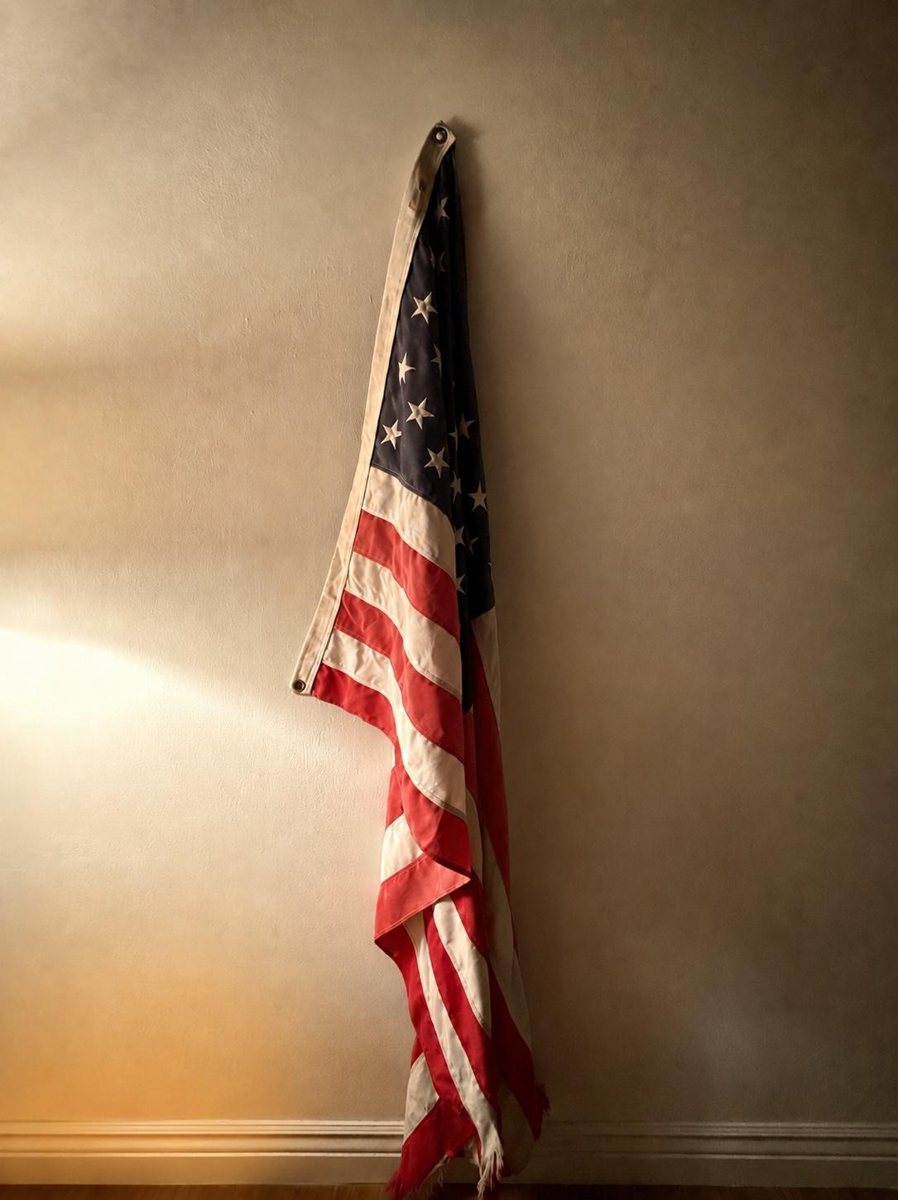
Figure 1. The American flag my father gave me. Personal photograph.
The second piece would expand that question into a full recreation titled The Quiet After: My First Apartment After the Marine Corps. Visitors would enter a mostly normal room. My father’s flag would hang on one wall. A packed military duffel bag would remain near the corner beside half-unpacked boxes. A final unit photograph would sit on a shelf near a few sets of civilian clothes. Nothing would look destroyed. The room would not be staged as a crisis. Its importance would come from what is missing: the noise of shared spaces, the certainty of a schedule, the people who once appeared every day without needing to be invited, and the sense that everyone around you understood the purpose of the work. Visitors might initially walk through without noticing the absence. That delay would be intentional because loneliness can hide inside a life that appears functional.
My brother Mark Gular, who has served on active duty and in the reserves, described separation as a period when veterans may grieve “their job, their friends, and their identity” (Gular). The recreated apartment would make those three losses physical. The packed duffel bag would represent a job and a way of life that has ended. The unit photograph would represent friendships that still exist but no longer share the same daily space. The civilian clothing would represent the uncertain work of building a new identity. Visitors could hear a low audio track made from ordinary sounds: a zipper closing, a phone vibrating without being answered, traffic outside, a washing machine, and then long periods of quiet. The room would demonstrate that homecoming is not always the joyful final scene shown in public ceremonies and movies. Sometimes the plane lands before the person feels that they have arrived. The two photographs displayed in the room would preserve both the formal structure of military training and the less formal bonds built outside it.
Laing observes that “mere physical proximity is not enough” to end loneliness (Laing). That point becomes clearer when the structures that once created connection disappear. In military life, connection is often built into the day. People train together, eat together, work through exhaustion together, and become responsible for one another. Civilian life offers more freedom, but it can require people to create every connection deliberately. That tradeoff is easy to overlook. The recreated apartment would therefore include a listening station where veterans from different branches and generations describe one small routine that helped them begin feeling grounded again. One might talk about returning to school. Another might describe coaching a child’s sports team, attending therapy, making art, volunteering, joining a faith community, or simply learning to invite a friend over instead of waiting for someone to notice the silence. The stories would not present one cure. They would show many ways of beginning.
Image not shown on this page. Figure 2. Personal photographs selected for The Quiet After recreation, representing military structure, identity, and daily camaraderie.
The third piece, Lee Teter’s 1988 painting Reflections, would appear in a darker gallery between The Quiet After and the final section, Finding the Way Home. The painting shows a veteran in a suit standing before the polished black granite of the Vietnam Veterans Memorial. His hand reaches toward the wall, but the reflection does not show only his body or the names carved into the stone. Fallen service members appear on the other side, standing together as though the wall separates two moments that still occupy the same life. The man depicted in the painting, Vietnam veteran Jim Williams, wore a suit rather than a uniform, which makes the image feel less fixed in one period and more connected to the life that follows service (Richardson). The veteran has returned to civilian clothing, but he has not left his unit entirely behind.
The painting belongs in the exhibition because it makes memory, grief, loyalty, and survivor’s responsibility visible without reducing them to a medical label. The viewer cannot tell whether the figures are memories, spirits, or the veteran’s own understanding of the people he still carries. That uncertainty is part of its power. A museum does not need to solve every emotion. It can create a place where visitors remain with a question long enough to recognize its weight. The painting would also challenge the idea that loneliness means isolation. The central figure is surrounded by the people he remembers, but he remains physically alone on his side of the wall. He is connected and separated at the same time. This is one reason Laing’s description of loneliness as a state that can exist even among others matters. A veteran can have family, friends, and a community while still missing the specific people who understood a particular part of their life.
The gallery around Reflections would remain quiet and uncluttered. A bench would face the painting, and the wall text would be brief. It would explain that Teter gave reproduction rights to Vietnam Veterans of America Chapter 172 and that sales of the image have supported veterans and their communities. The curatorial choice matters because the history of the work reflects the exhibition’s larger ethic: veteran experiences should not be turned into spectacle for someone else’s benefit. The painting has emotional power, but that power carries responsibility. Visitors would be asked to consider not only what the image makes them feel, but what they owe the people whose memories and losses make that feeling possible.
Image not shown on this page. Figure 3. Lee Teter, Reflections, 1988.
The fourth piece would change the emotional direction of the exhibition. Zach Bryan’s “Mine Again,” released on his 2022 album American Heartbreak, would play in the section called Finding the Way Home. Bryan served in the Navy before pursuing music full-time, which gives his work a connection to military transition, but the song would not be presented as a universal veteran anthem. Its value comes from the way it addresses the effort to recover a relationship with oneself. The song initially sounds as though the speaker is addressing another person. As it continues, the meaning shifts. The person being recovered is the self that became difficult to recognize after mistakes, pressure, and years spent carrying responsibility. The short statement “I am mine again” captures a form of healing that is different from forgetting (Bryan). It suggests ownership, recognition, and the ability to live inside one’s own life again.
“Mine Again” would play through directional speakers so visitors could choose whether or not to listen. Nearby, a wall would hold short anonymous reflections responding to one question: When did you begin to feel like yourself again? The answers might involve a classroom, a family dinner, a long drive, a new job, a pet, a piece of music, or a conversation that finally felt honest. The section would be careful not to force the exhibition into a clean recovery story. Healing is not a return to the exact person who existed before service. Experience changes people. The goal is not to erase what happened, but to build a life in which those experiences no longer have to be carried in isolation. Laing reminds readers that “you can be lonely anywhere,” even in places that appear full of people and possibility (Laing). Visitors would be asked what they will do with what they have learned.
The song would also prevent the exhibition from ending at the point of loss. An exhibition about veterans’ mental health can become misleading when every image is dark, every story is tragic, and every veteran is represented only through pain. That approach may attract attention, but it does not show a complete life. Veterans are also students, parents, artists, public servants, business owners, friends, and people who find humor in experiences that outsiders may not understand. The final gallery would include examples of education, art, athletics, therapy, public service, and community work. It would show that peace is not a single emotional state. It can be the ability to sleep, to trust a room, to remain in one place, to ask for help, to reconnect with family, or to imagine a future that is not organized around the next departure.
Image not shown on this page. Figure 4. American Heartbreak album cover, 2022, featuring “Mine Again.”
The fifth and final element would be a guest lecture by Joe Pisano, a retired Navy Chief and veteran artist whom I interviewed while developing the exhibition. Pisano could speak to both parts of the curatorial process. He understands military culture, and he also understands the choices involved in turning experience into art. His lecture would focus on how museums can create emotional connection without taking control of veterans’ stories. He warned that an exhibition can lose its purpose when it becomes “more entertainment than an avenue for healing/recovery” (Pisano). That warning should shape every part of Not Meant to Carry It Alone. Emotional intensity is not automatically the same as truth. A display can move an audience while still simplifying, exploiting, or speaking over the person whose life is being shown.
Pisano’s lecture would therefore center consent. Veterans should decide what they share, how their words are edited, whether their names appear, and how long their objects remain on display. Some may want to speak publicly. Others may prefer anonymity or decide that a story is not ready to become an exhibit. The museum should respect all three choices. Pisano could also discuss art as a language for experiences that may be difficult to explain directly. A painting, photograph, sculpture, or song can hold contradictions without demanding that the artist resolve it. That is what makes Reflections valuable and what allows “Mine Again” to move toward hope without claiming that the past has disappeared. Pisano’s presence would remind visitors that the exhibition is not merely about veterans.
The lecture could conclude with a conversation among Pisano, veterans, military family members, mental-health professionals, educators, and museum staff. No single group should control the exhibition’s meaning. Veterans bring lived experience, but their experiences differ by branch, era, identity, location, job, and the conditions under which they served. Family members understand forms of transition that may not be visible to the veteran. Mental-health professionals can help the museum avoid harmful framing and prepare support for visitors who become overwhelmed. Educators can help students connect the exhibition to history, civic responsibility, and public policy. Museum professionals can preserve objects and shape the visitor experience. The strongest exhibition would not flatten these voices into one message. It would allow them to remain different while still sharing responsibility for the space.
Image not shown on this page. Figure 5. Guest speaker (Joe Pisano) portrait provided for the exhibition.
The exhibition itself would unfold as a journey rather than a collection of five disconnected assignments. Visitors would begin with What We Carried, where the worn flag introduces the idea that ordinary objects hold histories. They would then enter The Quiet After, where the apartment recreation makes absence physical. Reflections would form the emotional center, showing how memories can keep relationships alive even after people are gone or separated. “Mine Again” would begin the movement toward identity and peace. Pisano’s lecture and the final response wall would turn observation into responsibility. The order is important. Visitors should not be rushed toward hope before they understand what has been lost, but they also should not leave believing that veterans are trapped permanently inside their hardest experiences.
The intended audience would extend far beyond veterans. It would include the college student who has never had a close relationship with someone who served, the family member searching for a better way to understand a loved one, and the policymaker whose decisions affect veterans’ health care, education, housing, and transition support. It would also include active-duty service members who may be thinking about life after the military and veterans who do not see themselves in the narrow stories commonly told about them. Each audience would be asked to leave with a more complicated understanding of strength. Strength can include endurance, but it can also include honesty, treatment, connection, and the decision to stop pretending that carrying something alone makes it lighter.
For civilians, the exhibition would challenge the belief that gratitude is enough. Saying “thank you for your service” may be sincere, but it does not automatically create understanding or belonging. Connection can mean listening without immediately trying to solve the story. It can mean supporting accessible care, creating veteran-inclusive classrooms and workplaces, funding transition programs, or recognizing that public policy continues to shape a service member’s life after discharge.Military decisions do not end when a deployment ends. Their consequences continue through families, communities, schools, hospitals, and the private rooms where people attempt to build ordinary lives.
For veterans, the exhibition should offer recognition without forcing identification. No visitor should be told that the flag, apartment, painting, or song represents them. The exhibit should instead say: this is one story; what is yours? The Library of Congress’s Veterans History Project offers a useful model because it preserves firsthand interviews, letters, photographs, memoirs, and other materials while allowing veterans to speak in their own voices (“Veterans History Project Overview”). Not Meant to Carry It Alone could include scheduled oral-history days where veterans choose what to record and what to keep private. Those accounts could rotate so the exhibition continues to evolve rather than presenting one fixed version of homecoming.
The museum would also benefit from the exhibition because it would deepen work it has already begun. School groups could use the galleries to discuss war, citizenship, mental health, and the human consequences of policy. Colleges, veteran organizations, health-care providers, and community groups could host programs connected to the exhibit. These partnerships might increase attendance or donations, but the more important outcome would be trust. The museum would show that it is willing to preserve not only the moments that make the public proud, but also the quieter chapters that are harder to display. It would honor service without demanding silence as the price of being honored.
I have always been drawn to museums because they allow people to step into a life or perspective they may never otherwise understand. SFMOMA, Tate Modern in London, and the Shrine of Remembrance in Melbourne have shown me that an object becomes more meaningful when the visitor understands the person and story behind it. A flag, article of clothing, photograph, or letter can appear ordinary until someone explains what it carried through time. This is also what I learned while writing the blackout poem, “In Search of Someone.” The poem moves through music, memory, and the possibility that one brief moment of connection may never return. Its meaning comes from what remains visible and what has been covered. Veteran stories can work in a similar way. The public often sees the visible words - service, sacrifice, strength - while the quieter language of grief, dislocation, love, and recovery remains hidden underneath.
Ultimately, Not Meant to Carry It Alone would not ask visitors to pity veterans or turn their lives into spectacle. It would ask them to pay attention. Through a worn flag, a quiet apartment, a painting at a memorial wall, a song about becoming recognizable to oneself, and a veteran artist’s warning about responsibility, the exhibition would show that homecoming is not always a single moment at an airport or a ceremony after deployment. For many people, it is a long process of rebuilding trust, identity, relationships, and purpose. The National Veterans Memorial and Museum has already created a place where veterans’ stories matter. This exhibition would ensure that the chapters after the uniform, after the mission, and after the applause are not left unseen.
When I look at my father’s flag now, I no longer see only what it has survived. I see the rooms it has occupied, the people I still carry with me, and the life I am continuing to build. Its damage does not make it less meaningful. The damage is part of the meaning. That is what I would want visitors to understand before leaving the exhibition: veterans do not need to become the exact people they were before service in order to find peace. They do not need to forget what they carried. But they should not have to carry it alone.
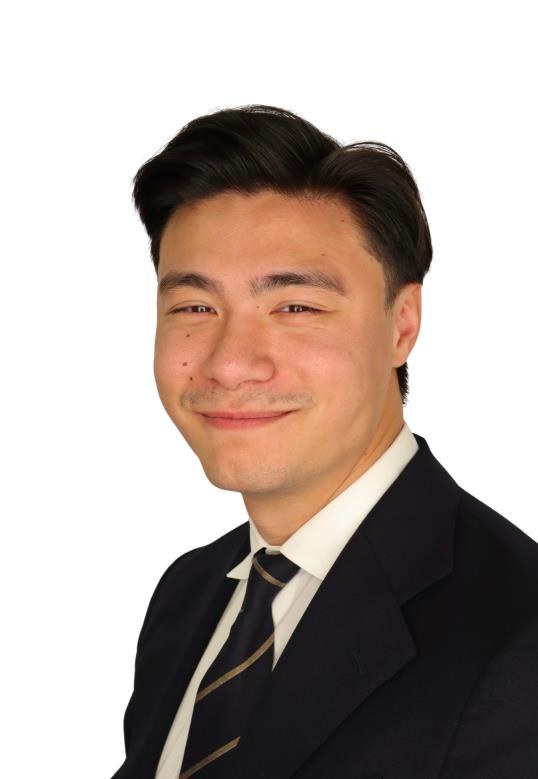
Nicholas “Nick” Bonasera is a political science student at Diablo Valley College, where he serves as President of the Student Veterans Alliance. He was recently elected Student Trustee for the Contra Costa Community College District, representing students at Contra Costa College, Diablo Valley College, and Los Medanos College. In this role, Nick advocates for expanding Zero Textbook Cost courses, strengthening student resources, and reducing financial barriers to education. He has also committed to returning his Student Trustee stipend to programs that directly support students across the district.
Before attending Diablo Valley College, Nick served for six years in the United States Marine Corps. He began his military career as an Amphibious Assault Vehicle technician and later became a Marine Security Guard, serving at U.S. diplomatic posts in Tijuana, Mexico City, Khartoum, Johannesburg, Addis Ababa, and Prague. His service included supporting security missions for senior U.S. officials and assisting during the evacuation of the U.S. Embassy in Khartoum. After leaving the Marine Corps, Nick served as a congressional intern in California’s 10th District, supporting constituent services, community outreach, and public events. He later worked as a campaign associate, helping with volunteer engagement and community organizing.
His military service and transition into civilian life inspired his interest in veterans’ mental health, public service, and the personal stories people continue to carry with them. He plans to continue his education in public policy and law, with the goal of working on legislation that improves opportunities for students, service members, and veterans.
Sources
“About Us.” National Veterans Memorial and Museum, nationalvmm.org/about/. Accessed 22 July 2026.
Bryan, Zach. “Mine Again.” American Heartbreak, Belting Bronco/Warner Records, 2022.
“Exhibitions.” National Veterans Memorial and Museum, nationalvmm.org/events-programs/exhibitions/. Accessed 22 July 2026.
Gular, Mark. Written interview. Conducted by Nicholas Bonasera, July 2026.
“Health Ranks as Top Concern for Veterans Immediately after Military Service.” VA Research Currents, U.S. Department of Veterans Affairs, 2 Jan. 2020, www.research.va.gov/currents/0120-Health-ranks-as-top-concern-for-Veterans.cfm. Accessed 24 July 2026.
Kropf, John. Written interview. Conducted by Nicholas Bonasera, July 2026.
Laing, Olivia. The Lonely City: Adventures in the Art of Being Alone. Picador, 2016.
“Museum Experience.” National Veterans Memorial and Museum, nationalvmm.org/visit/explore-the-museum/. Accessed 22 July 2026.
“NVMM ECHO.” National Veterans Memorial and Museum, nationalvmm.org/nvmm-echo/. Accessed 22 July 2026.
“Our Mission.” National Veterans Memorial and Museum, nationalvmm.org/about/mission/. Accessed 22 July 2026.
Pisano, Joe. Written interview. Conducted by Nicholas Bonasera, July 2026.
Richardson, Cameran. “Painting a Tribute to Veterans.” The American Legion, 4 Dec. 2013, www.legion.org/information-center/news/dispatch/2013/december/painting-a-tribute-to-veterans. Accessed 22 July 2026.
Soldiers of Conscience. Directed by Gary Weimberg and Catherine Ryan, Hart and Mind Productions, 2007.
Teter, Lee. Reflections. 1988. Vietnam Veterans of America Chapter 172.
“Veterans History Project Overview.” Library of Congress, www.loc.gov/programs/veterans-history-project/about-this-program/. Accessed 22 July 2026.
Zeigler, Katie. E-mail interview. Conducted by Nicholas Bonasera, 6 July 2026.